
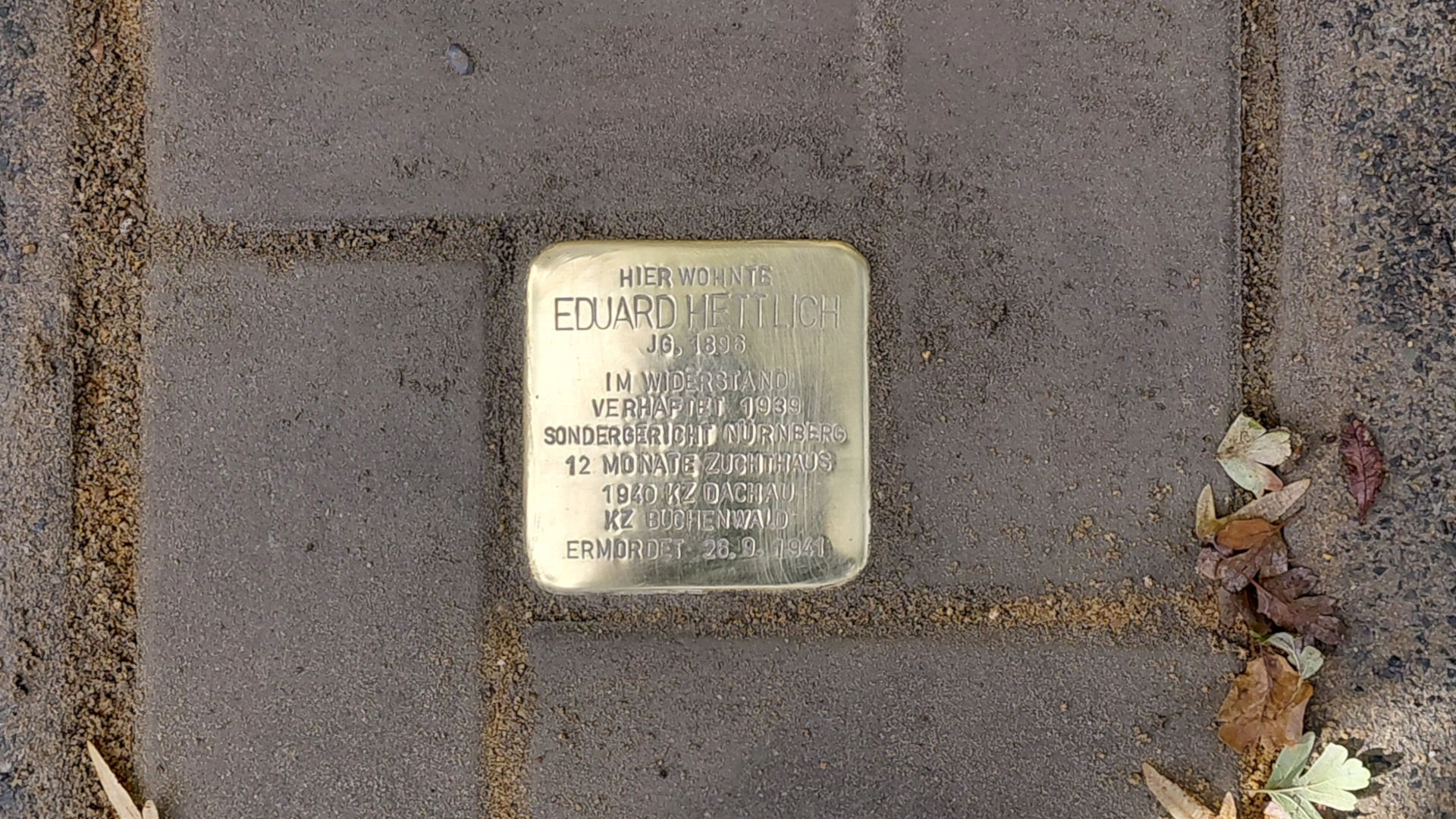
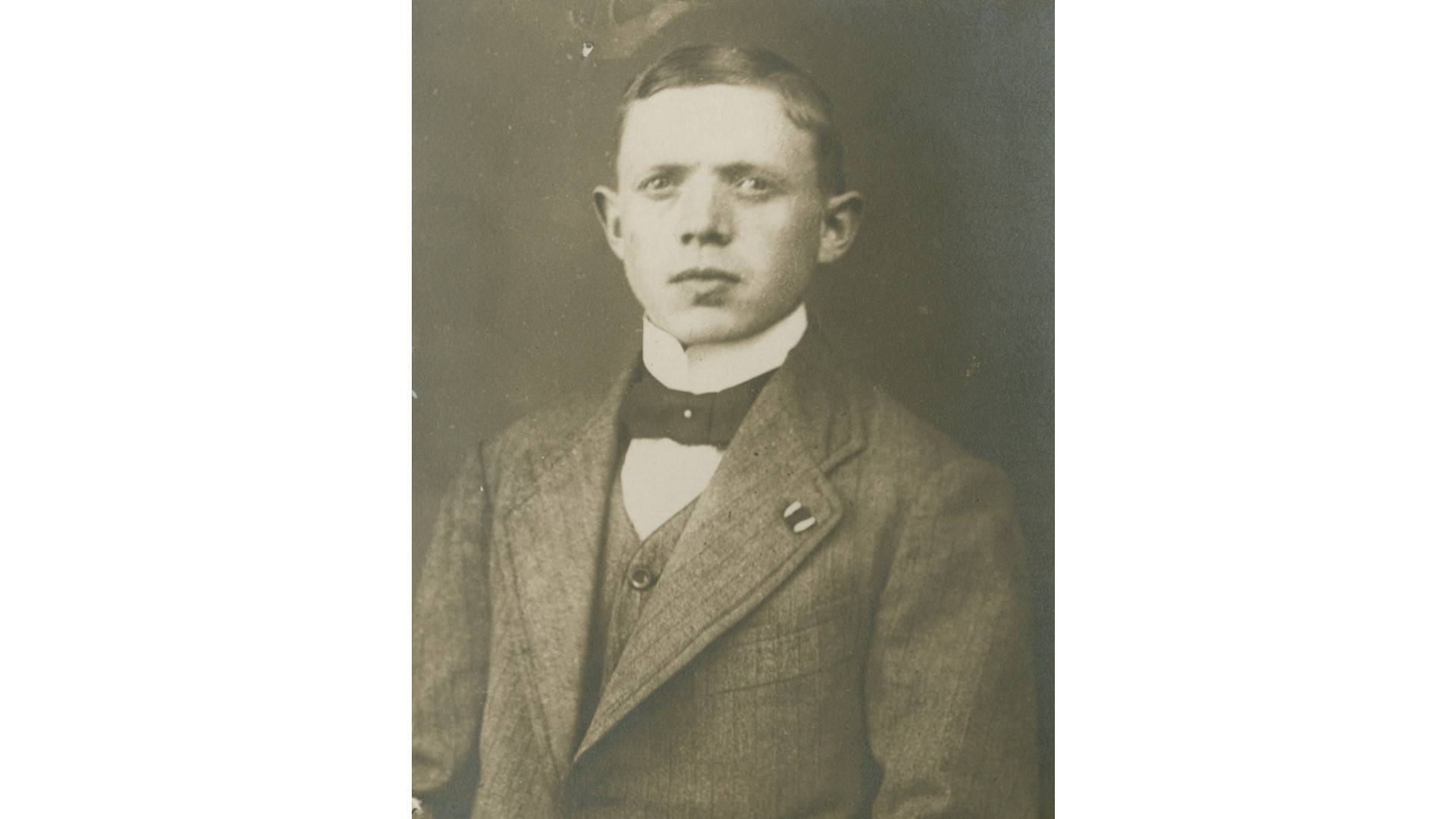
(Nuremberg City Archives, C21/VII Nr. 68)
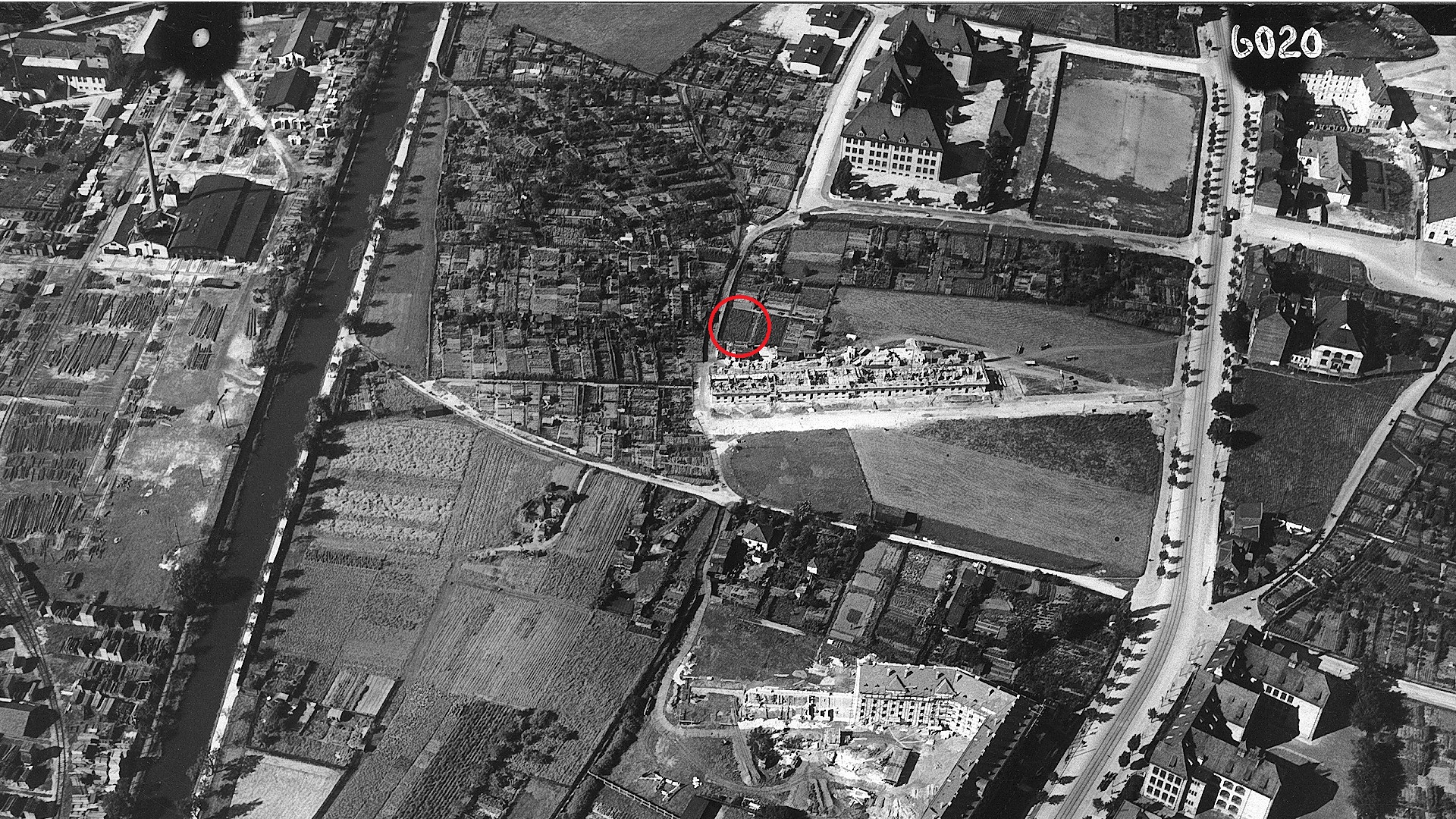
(Nuremberg City Archives, A 97 No. 404)
Eduard Hettlich
(1896-1941)
| Location of stone: Neckarstrasse 6 | District: Gibitzenhof |
| Sponsor: Doris Petersen | Laying of stone: 9 October 2026 |
Biography
On 9 October 2026, a stumbling stone was laid for Eduard Hettlich. His great-granddaughter Doris Petersen was sponsor. Eduard Hettlich spoke openly about his rejection of the National Socialist regime and its leaders. Sentenced by the Special Court Nuremberg, he was murdered in the Buchenwald Concentration Camp.
Johann Eduard Hettlich was born on 17 May 1896 in Nuremberg, as the son of Peter and Anna Marie Hettlich, née Stützel. His parents separated shortly after his birth. His father emigrated to the USA and his mother moved to Schweinfurt, where Eduard was raised. After a short job as a factory worker, he began an itinerant life and worked, in part, as a cabin boy.
In September 1914, Hettlich entered an infantry regiment as a volunteer. He was wounded twice. After he was discharged, he came to Nuremberg, where he worked – mixed with periods of unemployment – as a private detective, a business clerk, a postal worker, a worker in a metal toy factory and as a municipal meter reader.
On 6 April 1918, he married Babette Appold in Nuremberg. She was born on 27 June 1896 in Nuremberg, as the daughter of Johann Georg and Christine Appold, née Volland. The couple divorced on 24 June 1919. Their daughter, Christine Hedwig, was born on 2 August 1919.
On 11 October 1919, Hettlich married Margarete Graf. She was born on 1 August 1896 in Pressath near Eschenbach in the Upper Palatinate, as the daughter of Michael and Anna Graf, née Koller. The couple divorced on 20 June 1933. Two years later, on 16 May 1935, they married again.
Hettlich became a member of the NSDAP on 12 February 1932 and was assigned to the Ortsgruppe Steinbühl. On 1 June 1933, he was barred from the Nazi party “due to constant harassment of others”.
After a suicide attempt on 6 June 1932, he was unable to work for a longer period and was therefore forced to retire.
From 1933 onward, Hettlich was interrogated several times because of political statements. In 1935, the Public Prosecutor’s Office opened criminal proceedings against him due to comments about, in part, the “Röhm Putsch”. They found two notebooks with derogatory commentary about the government in his possession. They also found letters, addressed to the Reich Governor of Bavaria Franz Ritter von Epp and Reichs Chancellor Adolf Hitler, in which Hettlich complained about “the discontent among Franconian workers” and a lack of justice in society. The proceedings were stopped due to the so-called Immunity Act. During the criminal investigation, he was held in “protective custody” in the Nuremberg Penitentiary.
In 1939, Hettlich was denounced by a shop clerk. She claimed that Hettlich spoke disparagingly about the “Führer” and his war plans. On 17 February 1940, the Special Court of Nuremberg sentenced Hettlich for an offence against the “Treachery Act” of 1934 to a prison sentence of one year. The four months which he had spent in remand awaiting trial were to be subtracted from the sentence. His release date would have been 17 October 1940.
On 15 November 1940, Hettlich was brought as a prisoner in “protective custody” to Dachau Concentration Camp. On 12 July 1941, he was transferred to Buchenwald Concentration Camp. He was murdered there on 26 September 1941.
After his death, his widow tried to no avail to receive a widow’s pension.